



OPINION:
The shorter days of late summer usher in the melancholy prospect of autumn, the thoughts of returning to school, work and reality. Such anticipation makes the last moments at the beach, lake or camp site especially precious. The children can stay up late because they can sleep ’til noon. They come and go on whim, tracking sand or mud, but dirty footprints are easily washed away with seawater.
We put off thinking about the devil in the details waiting in the mundane world of everyday life. For now, conversation can be imbued with deeper insights taken at a slower pace.
But whether we’re in the country or city, by the sea, pool or in the familiar comfort of the screened back porch, it’s difficult to escape the machines buzzing, cell phones ringing with irritating melodies and the e-mailing, texting and Twittering of messages that in an earlier time would have waited weeks for an answer. (Or wouldn’t have been written in the first place.)
Gone is the golden silence required for contemplation, lost in the cacophony of our fine-tuned technology. But for those who look for trends before they emerge on Page One, gliding in under the radar of the information age, some of us crave a different direction. We struggle to escape the bytes that bind.
“Contemplation is not only possible but necessary, especially in light of all the overload,” writes David L. Ulin, book editor of the Los Angeles Times. No doubt he writes in defense of his job, but he bravely attacks the nature of network connections where every rumor and mundane thought is “blogged and tweeted.” Distraction masquerades as perception and we indulge the illusion that illumination is based on speed.
Hermes, the fleet-footed messenger of the Greek gods, was, after all, a born thief and a trickster. That should tell us something.
The politicians — most of them — have taken their leave of Washington, and the wisest of us can take some time to think about things. All the summer play with the children shouldn’t be seen as taking us away from important work, but as part of our important work, theirs and ours.
If Alison Gopnik, a psychologist at the University of California at Berkeley, is correct with her interpretation of the newest scientific findings in child development, we may discover we are on the cusp of a new Age of Romanticism, where, as the poet William Wordsworth put it, “the child is father of the man.” New science overturns commonly held notions that children are irrational, egocentric and amoral little creatures. “Psychologists and neuroscientists have discovered that babies not only learn more, but imagine more, care more, and experience more than we would ever have thought possible,” writes Ms. Gopnik in “The Philosophical Baby.” In some ways babies can be smarter and more imaginative than we are.
This doesn’t mean we should turn parental prerogative over to the toddler or that President Obama should consult Malia and Sasha on health care reform (as Jimmy Carter once said he consulted little Amy on arms control). But it does suggest that we recapture some of the child’s sense of wonder. The disciplines of work rob us of the imaginative images that inspire children, what Wordsworth saw in a host of daffodils, William Blake in a grain of sand, Emily Dickinson in the quickened wings of a hummingbird. As children, we enjoy fusing poetic observations with factual information, but as we grow older we grow suspicious of the imagination. Even before they can talk, babies exploit the human ability to use tools (toys) and imagination (pretend). Both abilities play a large role in evolutionary success.
Science and imagination can join forces again in the exploration of time and space expanding man’s horizons. “In The Age of Wonder,” Richard Holmes tells how science in the 18th century was driven by poetic wonder as well as new inventions. William Herschel, a musician who created a telescope that was unparalleled in its light-gathering power, discovered the first new planet in a thousand years that he named Uranus. The poet John Keats compares this discovery to the feeling he had on first reading Homer. Humphry Davy, a chemist and poet invented a safety lamp for miners and discovered nitrous oxide that would be used later as an analgesic. Samuel Taylor Coleridge wanted Davy to set up a laboratory in the Lake District surrounding his scientific experiments with nature’s tranquility.
The Romantics have been out of fashion in literary circles for some time. So has our sense of wonder. But in these imaginatively challenged times, the romance of imagination is recoverable. Alas, that’s enough for now. I hear my cell phone ringing.
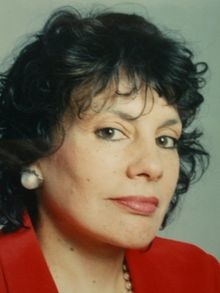
Suzanne Fields is an author and syndicated columnist.
Follow the author

Please read our comment policy before commenting.