



The NASA space probe Voyager 1 is 16.1 billion miles from Earth, becoming the first human-made object to reach a distance of one light-day, where a radio signal takes 24 hours to arrive.
The unmanned craft has been traveling away from Earth since 1977 and reached its record-setting distance of one light-day on Wednesday — 173 times the distance from Earth to the Sun.
It became the farthest man-made object launched from Earth in 1998, when it surpassed NASA’s Pioneer 10 probe.
People were interested in these podcasts
Voyager 1 entered interstellar space in 2012, according to the space agency.
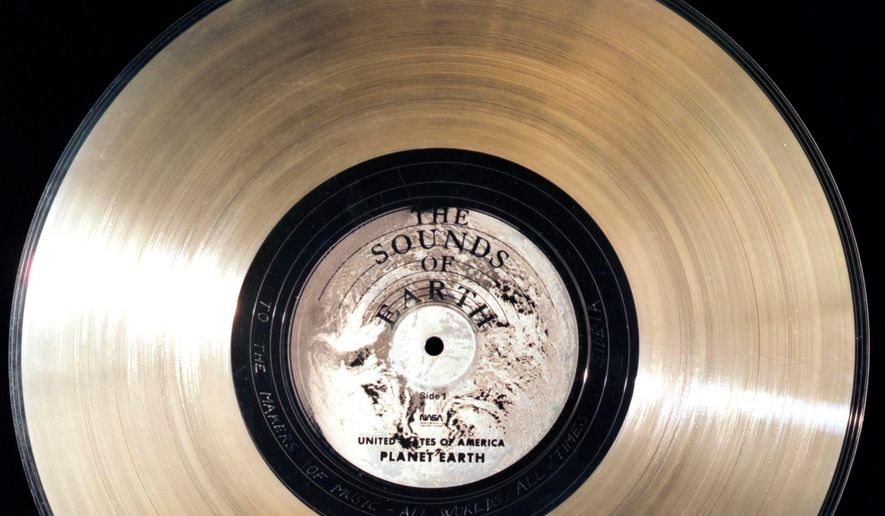
Voyager 2 also launched in 1977 and reached interstellar space in 2018, following a different path.
“For almost half a century, the agency’s Voyager mission has blazed a trail through space,” NASA said in an online advisory this month. “Voyager 1 and Voyager 2 were designed to explore the outer planets by taking advantage of a planetary alignment that occurs once every 176 years.”
NASA’s Jet Propulsion Laboratory, a division of the California Institute of Technology, built and operates the Voyager spacecraft. The federal agency’s Deep Space Network enables scientists to communicate with the probes through a global array of giant radio antennae.
Originally launched to study the outer planets of the solar system, the Voyager missions have continued beyond their original mission to study interstellar space — a vast region of gas, plasma and cosmic dust located between star systems.
“Both spacecraft continue to provide unique scientific observations of the environment beyond the heliosphere, the protective bubble created by the Sun,” NASA said.
Contact the author


Please read our comment policy before commenting.