



A version of this story appeared in the daily Threat Status newsletter from The Washington Times. Click here to receive Threat Status delivered directly to your inbox each weekday.
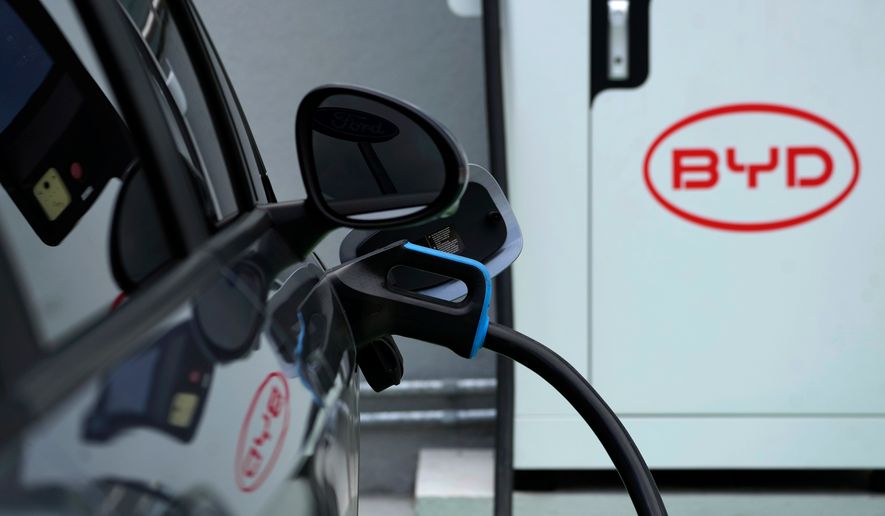
SEOUL, South Korea — The U.S. military, citing unspecified “risks to our personnel,” on Monday banned electric vehicles manufactured by Chinese automaker BYD from Kadena, a key U.S. air base on Okinawa.
“These vehicles present an unacceptable and unmitigable risk to our personnel and our mission,” Lt. Col. Alli Stormer said, according to Reuters.
She did not say which specific concern had prompted the move against vehicles produced by BYD, the largest global supplier of EVs. The firm had been added to a Pentagon blacklist of companies allegedly supporting China’s military, which included 188 Chinese companies, in June.
People were interested in these podcasts
Japanese media speculated that the presence of Typhon missile systems at the base — weapons capable of striking Chinese ports that have irked Beijing — may be one reason for the ban.
Current-generation civilian vehicles — “smartphones on wheels,” with built-in navigation sensors, dashboard cameras and other systems that record and store location, image and audio datasets — are emerging as security risks.
Those risks came into sharp focus in an exercise conducted earlier this month by Norway’s Home Guard.
According to Scandinavian media, rental cars used by reservists recorded and stored their locations, captured video of personnel entering and exiting, and recorded security pad codes at facility gates during the exercise.
One of the Norwegian officers reportedly discovered the extent of the data storage by accident.
Volvo is owned by Chinese multinational Zhejiang Geely Holding Group. After the reports appeared, Volvo stated that under Swedish and EU data privacy laws, none of the cars’ data could be transferred to China.
Also this month, AIVD, the Dutch General Intelligence and Security Service, in a publicly released report, pointed out the rising perils posed by smart cars’ built-in systems.
“These systems collect a great deal of data about occupants, the vehicle itself, and about objects and people in the vicinity,” said the document, which was widely reported. “Various parties, including state actors, can gain access to this data.”
Last year, British defense companies warned staff not to connect their personal devices to Chinese-made cars for fear of data extraction.
China, wielding economies of scale, a high-tech industrial base and aggressive pricing initiatives, is leading the charge in global smart car sales.
According to the specialist website Automotive Manufacturing Solutions, or AMS, China overtook Japan as the world’s leading vehicle exporter in 2023.
Chinese manufacturers, led by BYD and Chery, are leading suppliers in global auto exports and the EV sector, AMS found.
It is not just carmakers that are making Western counterintelligence officials nervous.
In June, the Pentagon named 188 companies, including automakers BYD and NIO, e-commerce firm Alibaba and internet firm Baidu, as enterprises supporting China’s military, Reuters reported.
Contact the author


Please read our comment policy before commenting.